Experimental Warning Program
TAKE PART IN 2024 ACTIVITIES!
2024 NOAA Hazardous Weather Testbed activities will have both virtual and in-person opportunities.
- NWS Participant Opportunities (.pdf, updated 25 Jan 2024)
- Emergency Management & Broadcast Meteorologist Opportunities (.pdf, updated 25 Jan 2024)
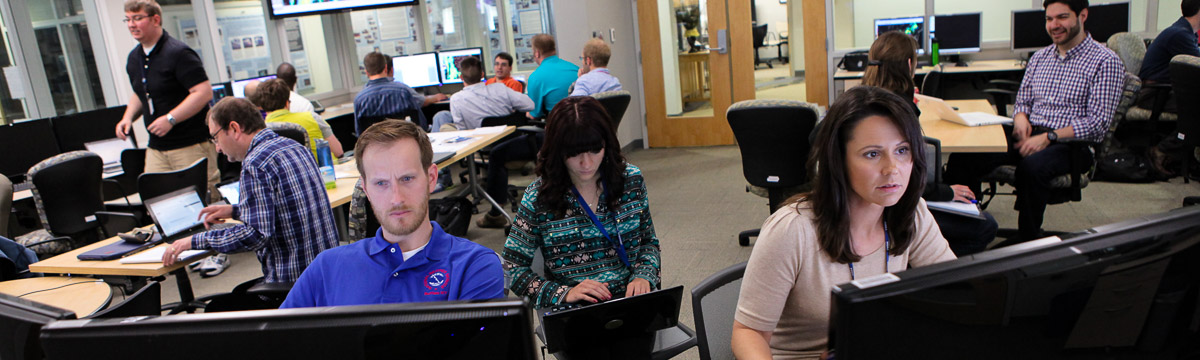
The Experimental Warning Program (EWP) is a part of the NOAA Hazardous Weather Testbed at the National Weather Center in Norman, Oklahoma. The HWT EWP mission is to improve the nation's hazardous weather warning services by bringing together forecasters, researchers, trainers, technology specialists, and other stakeholders to test and evaluate new techniques, applications, observing platforms, and technologies.
The annual Spring Experiment provides forecasters with a first-hand look at the latest research concepts and products, and immerses research scientists in the challenges, needs, and constraints of front-line forecasters. The EWP helps transition severe weather research and technology to improve the Weather Forecast Office’s severe weather warnings for hail, wind, and tornadoes. The EWP tests research concepts and technology specifically aimed at short-fused warnings of severe convective weather.
EWP Training Modules
- GOES-16 All-Sky LAP Products Derived from the ABI for HWT 2019
- NOAA/CIMSS ProbSevere Version 2 (all hazards)
- Advanced TPW Product
- GLM Gridded Products
- GLM Average Flash Area and Total Optical Energy
- NUCAPS Soundings at HWT 2019
- Single-Radar Azimuthal Shear (AzShear) (PDF)
- New Mesocyclone Detection Algorithm (NMDA) (PDF)
- Conditional Probability of Tornado Intensity (CPTI) (PDF)